Mark Santos — Mark Studios
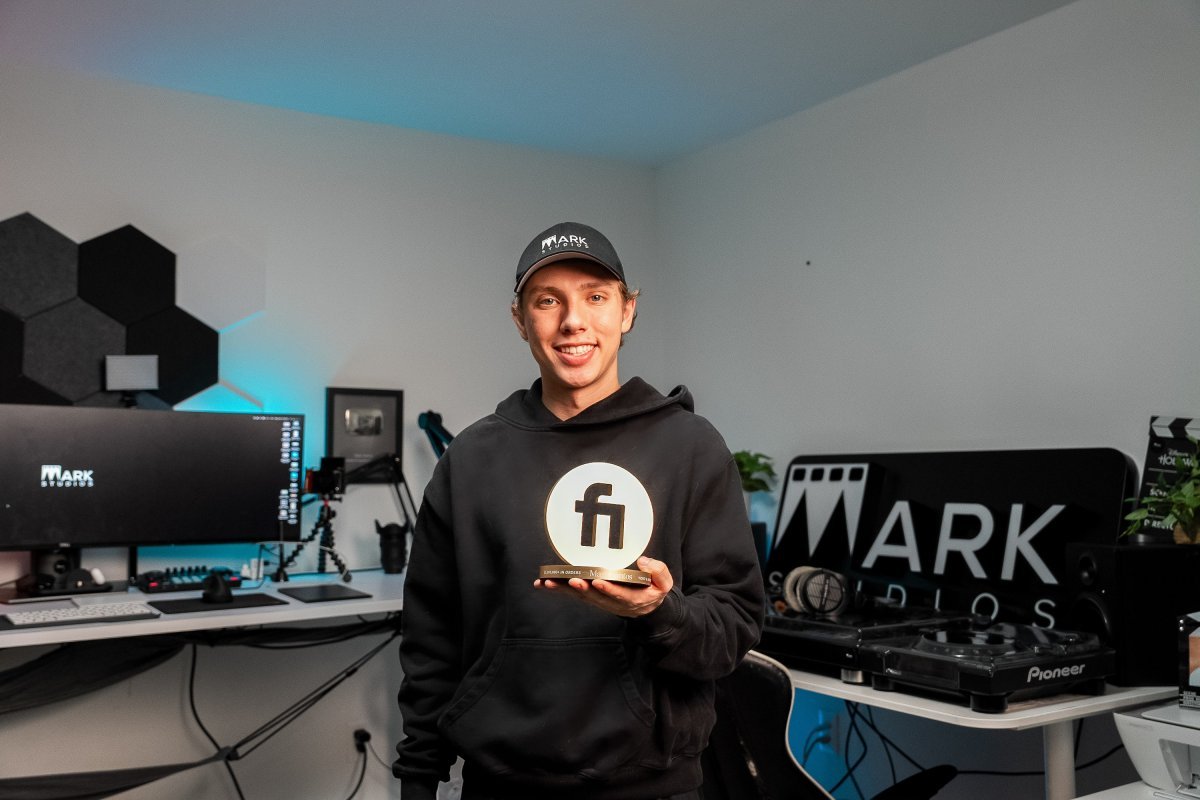
You started a YouTube channel at the age of 10 and grew it to more than 200,000 subscribers. What did that experience teach you about storytelling and audience attention that still influences your work today?
I started making YouTube videos at 10, in São Paulo, and I've had the same main channel my whole life. It began in Portuguese, later switched to English, and grew past 200,000 subscribers and 10 million views, which earned it YouTube's Silver Play Button.
The biggest lesson: attention is earned in the first few seconds and lost in any second that doesn't need to be there. I learned that the slow way, on my own videos, years before anyone paid me to edit. It's still how I judge every edit we deliver. Would a viewer keep watching here? If not, the cut is wrong, no matter how good the footage looks.
Can you take us back to your first Fiverr order in 2020? What was the assignment, and how did you earn that client's trust with little professional experience?
In 2020 the pandemic cost me my job as an IT assistant on campus, so I started selling video editing on Fiverr. I edited on a dented MacBook in Final Cut Pro, and the first orders were YouTube videos from creators who needed an editor.
I didn't have a professional portfolio, but I had something most new editors don't: almost ten years of uploading my own videos. I could talk to creators about pacing and keeping viewers watching, not just cuts and transitions, and I think that's what made them trust me. That first month brought in $2,500, which told me the demand was real.
What made you decide to establish Mark Studios in 2021? Was there a particular moment when you began thinking like a business owner rather than a freelance editor?
The moment was burnout. Within months, the demand outgrew one person. My Trello board was overflowing, files went missing, versions got mixed up, and urgent messages piled up.
I realized more hours wouldn't fix it, but a system would. So I mapped out my whole process and wrote a small Google Apps Script that logged every order in a spreadsheet and created a Drive folder for it. Then, in early 2021, I hired my first editor on a single test project. That's when I stopped thinking of the work as a pile of gigs and started thinking of it as a process, and I founded Mark Studios in February 2021.
What role has Fiverr played in your growth, and how do you approach building client relationships and attracting business beyond the platform?
Fiverr has been the foundation. It's where we've completed more than 8,000 orders for over 4,500 clients as a Top Rated seller, and where we passed $1 million in orders.
On relationships: I treat a first order as the start of a relationship, not a one-off sale. A small order can turn into years of work if the client feels looked after. Two rules help a lot. I never quote before seeing the files, and I call the first delivery a draft and ask questions, so clients feel comfortable telling us what they really want.
Outside Fiverr, people find us through our website, where we publish our prices and our own research on video editing, and through on-location filming for businesses here in South Florida.
You built the agency without investors. How did you decide when to reinvest your earnings, and which early investment made the biggest difference?
It's been funded by the work from day one. Looking back, the money that mattered most went into removing bottlenecks, and early on the bottleneck was me.
So the biggest investment wasn't gear; I was still on that dented MacBook. It was paying my first editor in 2021, and putting the time into documenting how we work: more than 30 SOPs with Loom walkthroughs and checklists. That's what let the business grow beyond my own hours. I also priced higher to attract serious clients, and that paid for better quality.
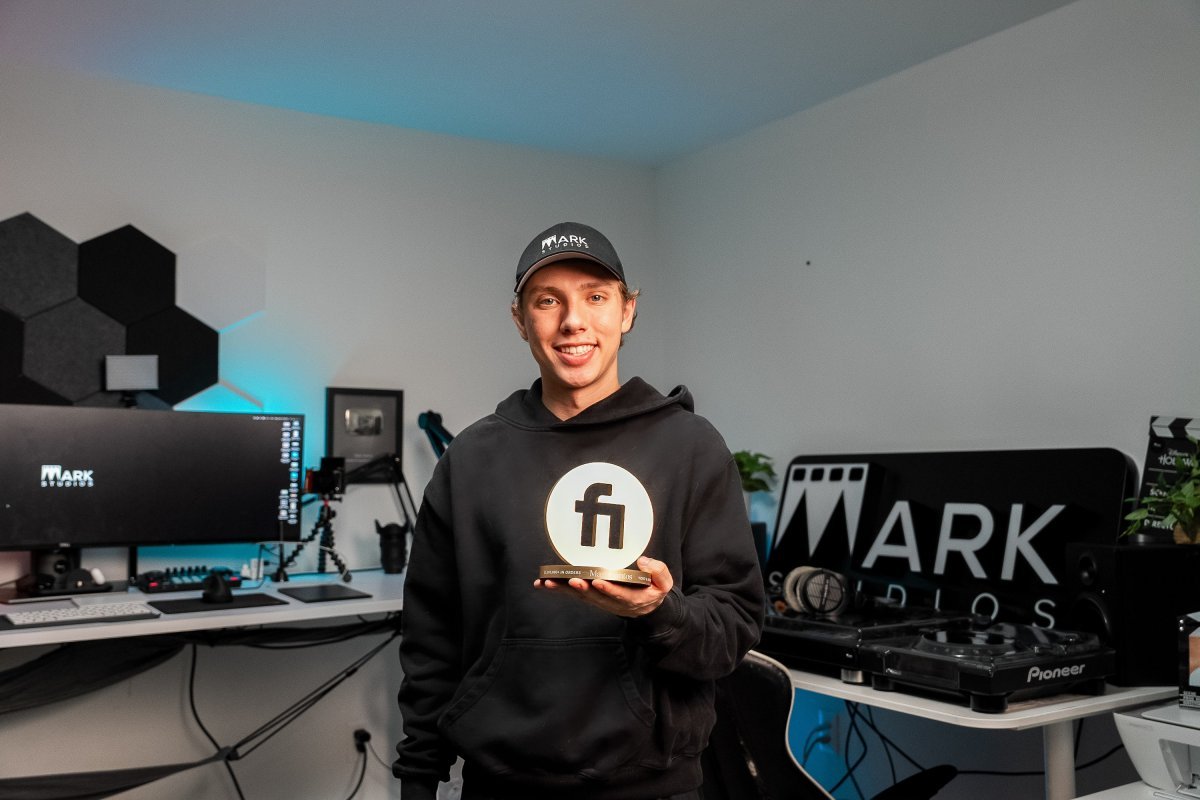
How are AI tools changing your production and editing process? Where do you find them useful, and which aspects of the work still depend most on human judgment?
AI has changed the job more in the last two years than anything before it. This year I brought production back in-house and rebuilt it around AI-assisted tools.
AI now handles the mechanical parts: transcribing footage, finding silences and retakes, first-pass captions, building motion graphics in code, and automated checks before anything ships, like the wrong aspect ratio or on-screen text that doesn't stay up long enough to read. On the software side, AI writes most of the code for our internal tools, while I handle the architecture and review.
What still depends on people: deciding what the story is, what to cut, and whether a moment lands. Reading what a client means when they can't quite put it into words. And anything where accuracy matters, like the claims a brand makes in its captions. AI makes the work faster, but the taste and the judgment are still the job.
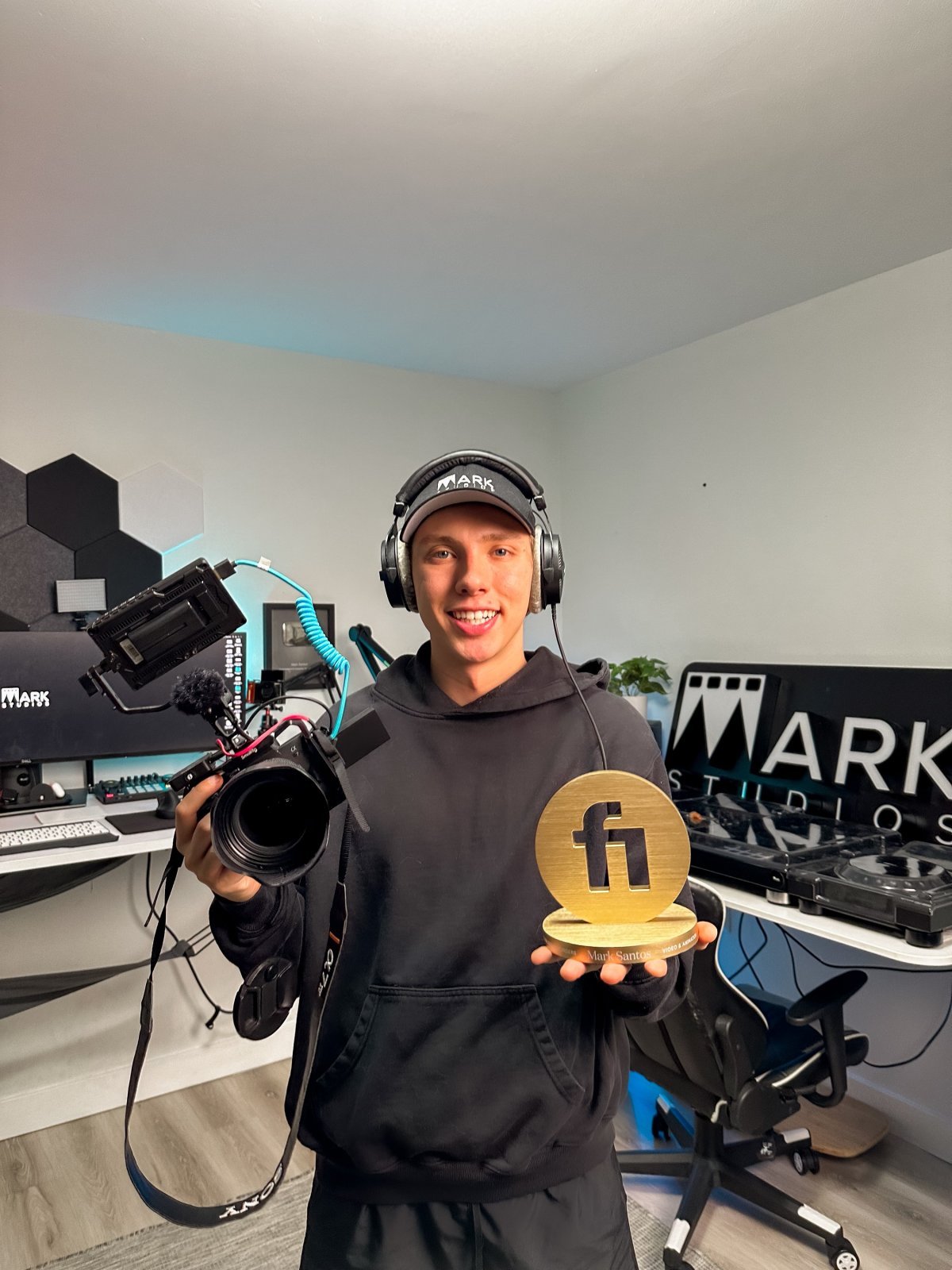
In February 2025, you rang the New York Stock Exchange opening bell with Fiverr. What did that moment mean to you, and how has your definition of success evolved since your first order?
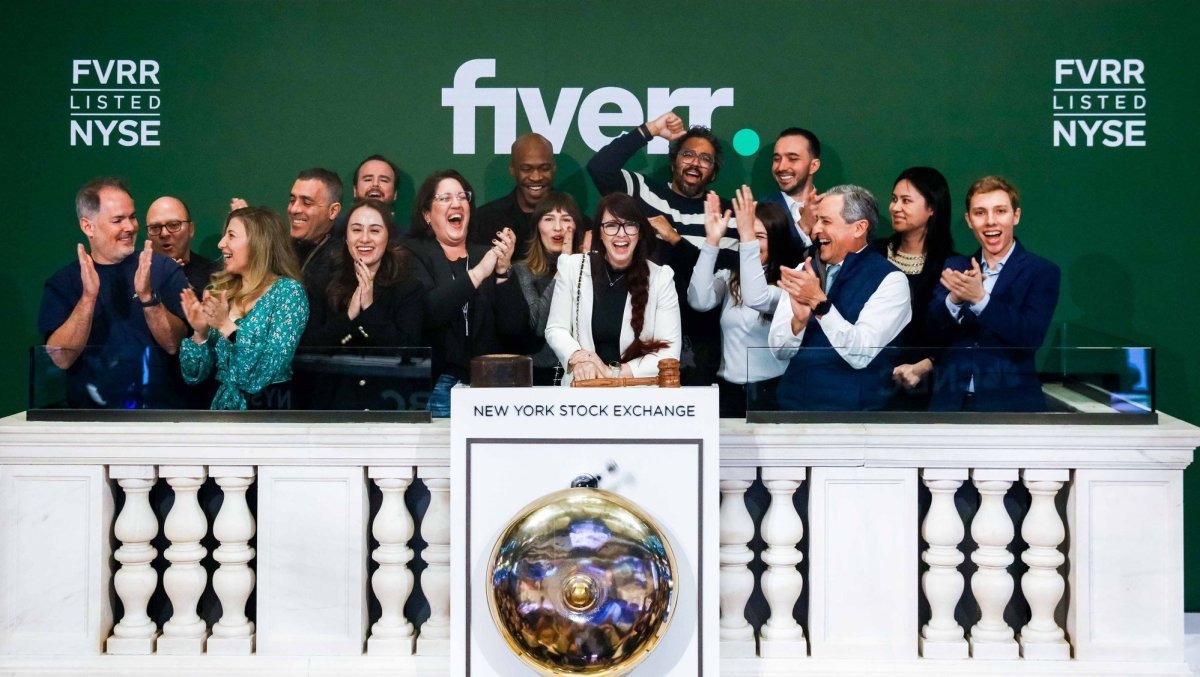
On February 19, 2025, I was on the podium when Fiverr rang the opening bell at the New York Stock Exchange. Less than five years earlier I'd lost a campus job and started selling edits on Fiverr from a dented laptop. Standing there was proof that a marketplace really can take someone from nothing to a real business.
When I started, success meant the next order. Now it means a business that runs well without me holding every piece of it, built on systems, with clients who keep coming back, and time for the people I care about.
Mark Santos is the founder of Mark Studios, a video production and editing studio in Palm Beach County, Florida. He has been editing
videos since he was 10, on his own YouTube channel, which grew past 200,000 subscribers and 10 million views. He started selling video editing on Fiverr in 2020, founded Mark Studios in 2021, and has since completed more than 8,000 orders for 4,500+ clients as a Top Rated seller, passing $1 million in Fiverr orders. In February 2025 he rang the NYSE opening bell with Fiverr. He studied at the University of South Florida.