Ruben Arena — Emome Technologies

What's the story behind Emome? What gap in the market inspired you to build it?
Emome was born from a very personal place. I've always been fascinated by how people connect emotionally — how we express love, support, and care in our daily lives. When I looked around, I noticed that most apps were focused on dating or meeting new people, but there was very little attention given to nurturing the relationships we already have. Friends drifting apart, couples losing the spark, family bonds weakening — these are real, painful things that technology largely ignores.
Emome is designed to change that. We built an app that helps people stay emotionally connected — tracking moods, sharing feelings in gentle and meaningful ways, and prompting small acts of care between people who matter to each other. It's not about replacing human connection; it's about enriching it.
You're 21 and already running a company. How did you develop the vision and confidence to take on something this ambitious at such a young age?
I won't pretend it wasn't intimidating. But I think youth can be an advantage when it comes to certain kinds of innovation — you haven't yet been told "that's not how it's done." I grew up in a generation that's acutely aware of loneliness, of digital fatigue, of relationships that feel shallow despite constant connectivity. That gave me both the motivation and, I hope, the clarity to see what was missing.
Confidence came gradually. I started building things in my bedroom, shared them with friends, listened to their feedback, iterated. Every small win — a user who said Emome helped them reconnect with their mother, a couple who used it to navigate a difficult period — reinforced that we were on to something real.
What does Emome actually do day-to-day for its users?
At its core, Emome is a relationship companion. Users create a shared space with someone important to them — a partner, a friend, a sibling — and the app gently prompts them throughout the day: how are you feeling? Have you checked in with this person lately? Would you like to send them something?
We have features like Mood Mirrors, where both people log their emotional state and the app creates a kind of shared emotional portrait of the relationship over time. There are Kindness Nudges — small, personalised suggestions for things you could do or say that would mean something to that specific person. And we're building deeper tools for emotional journaling that the other person can optionally view.
It's intimate, quiet technology. We deliberately avoided the dopamine loops and notification spam that most apps rely on. Emome should feel like a gentle hand on the shoulder, not a loud alarm.
You were selected to present at We Make Future in Bologna in 2026. What was that experience like, and what did you take away from it?
It was a turning point for me. We Make Future is one of the largest digital innovation festivals in Europe, and being chosen to present there — as a 21-year-old, with a product still in early development — felt surreal. But what I took away wasn't validation; it was perspective.
I met founders at all stages, from people who had just had an idea to those who had built and sold companies multiple times. What struck me was how consistent the core challenges were: finding the right people, staying true to your original vision under pressure, and knowing when to listen to the market versus when to hold your ground. Those conversations changed how I think about building Emome.
Also, the response from people who tried the demo was genuinely moving. Several attendees came back to me at the end of the day to say they'd been thinking about someone they'd lost touch with. That's exactly what Emome is meant to do.
Italy is not typically considered a startup hub on the level of London or Berlin. How has that shaped your journey?
It's both a constraint and an advantage. The ecosystem here is smaller, which means less access to capital, fewer local role models, and sometimes a cultural environment that's more sceptical of risk-taking. I've had conversations with Italian investors who were genuinely baffled by the idea of building a company around emotional technology — it didn't fit their mental models.
But Italy also gave me something invaluable: a deep understanding of what real, enduring relationships look like. There's an appreciation for depth here, for quality over speed, for things that last. That sensibility is baked into everything we build at Emome. And now, with remote work and global distribution being the default, geography matters less and less. Our users are everywhere. The product doesn't need to come from Silicon Valley to matter.
What's the hardest thing about building a company focused on something as intangible as emotional connection?
Measuring it. Investors want metrics — DAUs, retention, engagement. But how do you measure whether two people feel closer to each other? How do you quantify a moment of genuine emotional understanding?
We've had to develop our own frameworks. We track what we call Relational Health Indicators — things like the consistency of check-ins, the depth of sharing over time, whether users report feeling "seen" by the people they're connected with. It's not perfect, but it's honest to what we're actually trying to build.
The harder challenge is internal. When you're building something that's supposed to help people be vulnerable and open with each other, you have to hold that responsibility seriously. We talk a lot about ethics, about not exploiting the emotional data our users share with us, about building trust slowly rather than scaling fast. Some days that feels like swimming upstream. But I wouldn't want it any other way.
What's next for Emome — and what advice would you give to other young founders in Europe who are building something unconventional?
We're moving toward our first significant funding round — we've had early-stage interest from investors who understand the consumer emotional wellness space. The product roadmap for the next 18 months includes expanding our Mood Mirror features, launching a version designed specifically for long-distance relationships, and opening access to couples therapists who want to recommend Emome as a supplementary tool.
For other young European founders building something that doesn't fit the standard mould: trust the specificity of your vision. The more niche and personal your starting point, the more likely you are to build something that genuinely matters to people. Don't let the pressure to sound like every other startup pitch dilute what makes your idea interesting. And find your people — the five or ten people who immediately get what you're doing, who feel the problem viscerally. Build for them first. Everything else follows.
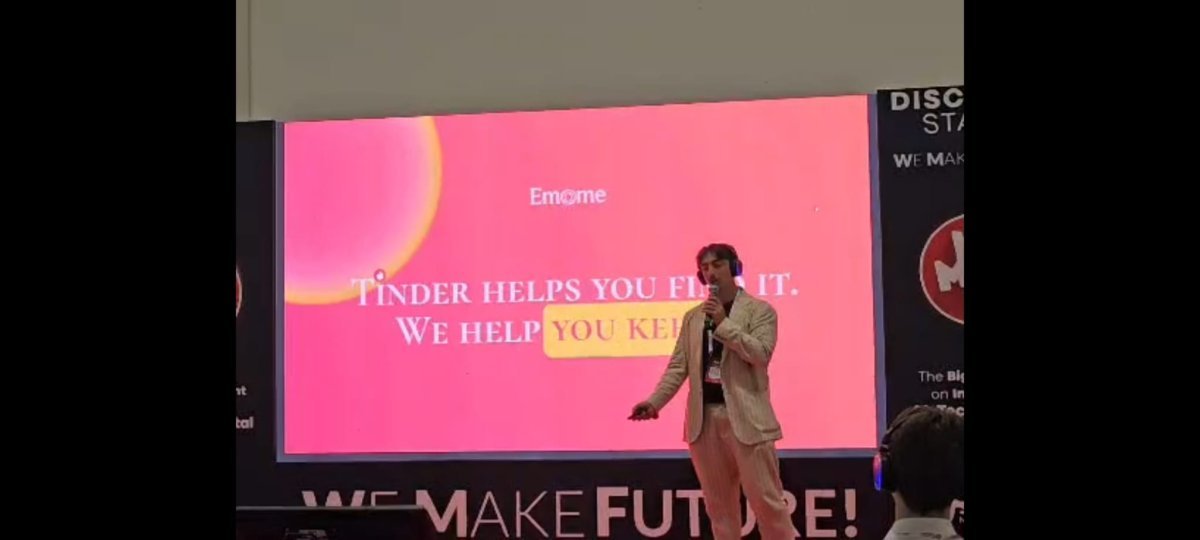
Ruben Arena is the 21-year-old founder and CEO of Emome Technologies, a startup building emotional connection tools for the digital age. Based in Italy, Ruben began developing Emome after recognising a gap in the technology landscape: while apps proliferate for meeting new people, very few focus on deepening and sustaining the relationships we already value. In 2026, Emome was selected to present at We Make Future in Bologna, one of Europe's largest digital innovation festivals. Ruben is currently focused on growing Emome's user base across Europe and preparing for the company's first major funding round.